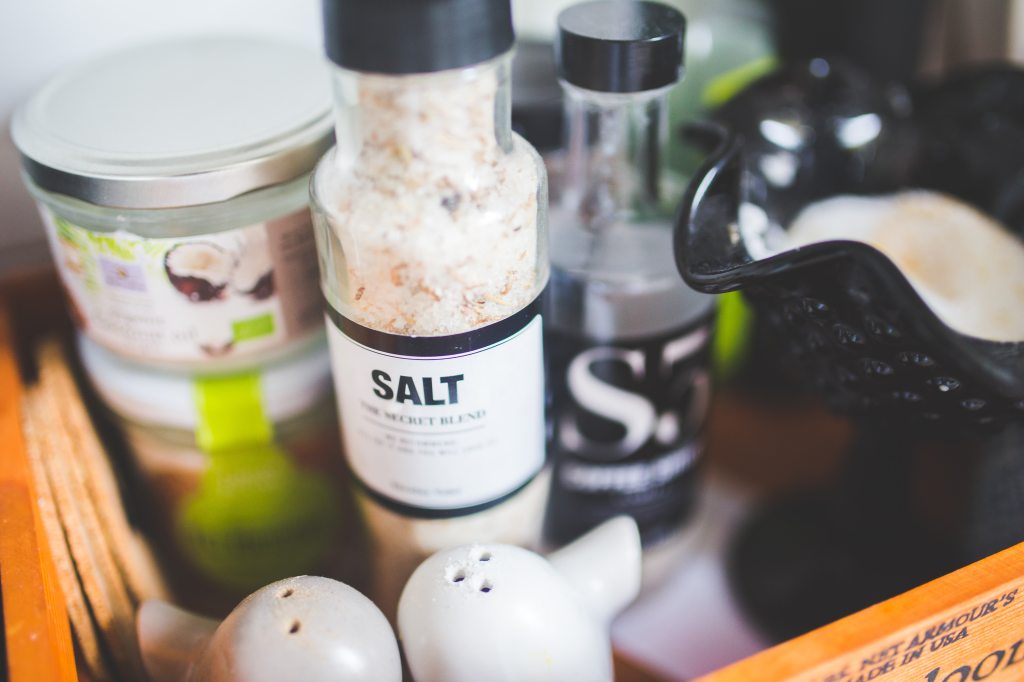
There Is nothing cookie-cutter about my nutritional plans for people. I build custom, individualized plans for people based on their age, height, weight, sex, activity levels, food sensitivities, family history, etc. But the one thing that I almost always recommend to people after doing our initial consultation is to reduce their sodium intake in their diet. Why? Well, for starters, an overconsumption of sodium leads to water retention which translates to a higher number on that dreaded bathroom scale. For some people, that’s enough of a reason to change their habits. But more importantly, too much sodium has a negative effect on our health, specifically our heart.
The American Heart Association (AHA) says that the average American eats nearly 3,400mg of sodium per day! To some of you, you may be indifferent about what that number means. But to those of you who have tracked your food before, you know that is a terrifying number, especially for those who are sedentary most of the day (athletes can get away with more sodium due to their high levels of activity). The AHA goes on to say that IDEALLY, most people should consume about 1,500mg per day. Ironically enough, the majority of people I make plans for now eat between 1200-1600mg per day. Some of you may think that the reduction in sodium from 3,400mg to 1,500mg is dramatic but if done properly, it’s really not that difficult at all. The easiest and healthiest way to reduce sodium intake is to replace a few foods with fresher options. Listed below are some food choices that are not only making you bloated and maintaining extra water weight, but potentially could be damaging to your heart health if consumed too often:
Pizza
Bread
Salted nuts
Chips
Excess condiments (hot sauce, soy sauce, BBQ sauce, steak sauce, salad dressings)
Table salt
Baking powder and baking soda
Soup
Frozen dinners
Pickles
Canned foods
Eating out too often (chefs like using salt!)
Prescription medications
Over-the-counter drugs
The list is actually quite extensive but the above should give you an idea of foods that you can limit now to improve your health. But my biggest suggestion to new customers is twofold. First, check the labels of the food you eat for sodium. This will give you a better idea of what’s going in your body. Applied knowledge is power. Second, if your food comes from a package or box, switch it out with fresh food. You will be hard pressed to find food in nature that’s high in sodium.
Now, does this mean to not eat any food with sodium? Of course not! It just means to be smart about it and like most other macronutrients and micronutrients, to understand it’s purpose and be smart about the amount you consume. Sodium has its benefits. It is one of the key electrolytes which helps you stay hydrated and hydration is critical to a healthy life and performance in the gym! However, it does not mean that if you eat more sodium that your performance will continue to improve! In fact, there is a point where it begins to make your heart work harder which is counterproductive for us to reach optimal health. I recently started helping a very good friend of mine with his nutrition. By switching a couple different meals around and eliminating one condiment from his diet, he quickly eliminated excess water retention (7 lbs in one week!) and said his performance in the gym actually improved, a win-win!
It is important to understand that excess sodium increases the volume of blood in our bloodstream making our heart work harder which increases blood pressure. The older we get, the more we must control our blood pressure. If it is not something that we keep under control, it could lead to heart disease, a heart attack or stroke. For more information on sodium, its effects on our body, and how to manage it, take a look at this link from the AMA, https://www.heart.org/-/media/data-import/downloadables/8/2/0/pe-abh-why-should-i-limit-sodium-ucm_300625.pdf.
Although the majority of my posts don’t dive too deep into the science of things because I know it can seem boring to many people, I wanted to bring this important topic to your attention because sodium plays a huge role in our health. And I have found that most people in America eat way too much sodium simply because of convenience. Drive-thru restaurants, canned foods, processed food, and TV dinners have ruined people’s health. In my personal opinion, I don’t think that the increase in cancer and life-threatening illnesses and the increase in “convenient” food options are coincidence. If you want to lose weight, be less bloated, feel better about yourself, and lower your blood pressure, I highly recommend tracking your sodium intake (everything you eat and drink)! I think you will be shocked to see how much you eat per day and hopefully it motivates you to make a positive change in your diet! How you look, how you feel, and the length of your life may literally depend on how you manage this one micronutrient.
Have a great week!
Coach Rich
 Richard Fitzgerald